E-Scooter Crash With a Car in Oregon: Are You Treated Like a Pedestrian, Cyclist, or Driver for Fault?
E-Scooter Crash With a Car in Oregon: Are You Treated Like a Pedestrian, Cyclist, or Driver for Fault?
Educational information only, not legal advice. Oregon e-scooter injury claims are fact-specific. This article explains general Oregon rules and common fault issues, not a guaranteed outcome.
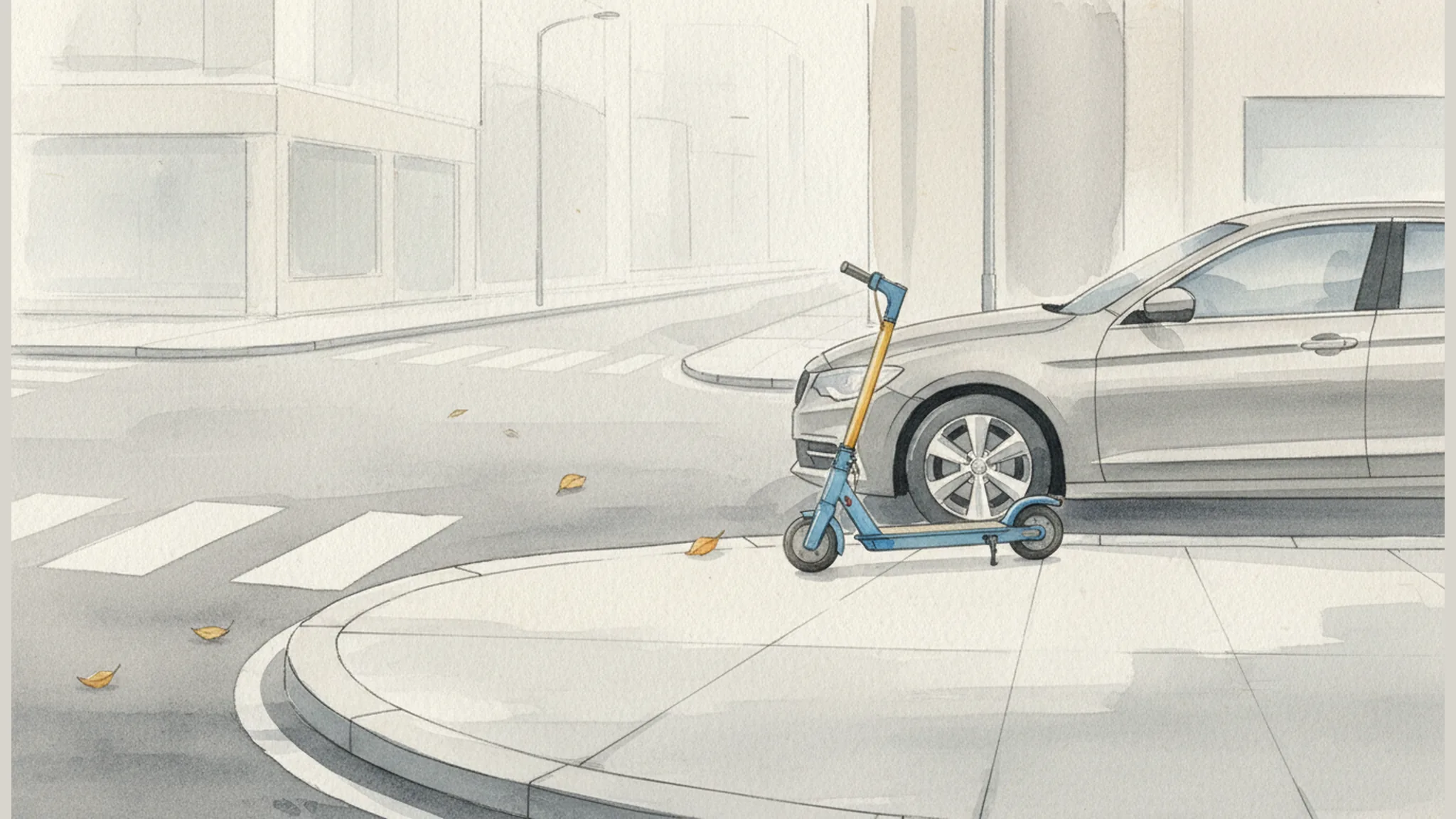
If you are hit by a car while using an e-scooter in Oregon, the legal answer is usually not as simple as calling you a pedestrian, bicyclist, or driver across the board.
For many fault questions, Oregon starts with its motor-assisted-scooter statutes. Under ORS 801.348, a motor assisted scooter has its own statutory definition. Under ORS 814.510 through ORS 814.528, scooter operators generally have vehicle-like rights and duties on public ways unless a rule does not fit or the code says otherwise.
That means the analysis usually turns on where the scooter was being used, what movement was happening, and which Oregon statute governed that location.
For broader claim context, see our electric scooter accidents page and our post on Oregon e-scooter hit-and-run and UM coverage. For a related two-wheel comparison, see E-Bike vs. Car Crash: Does Class 1, 2, or 3 Classification Affect Your Claim in Oregon?.
1) The Short Answer: Usually None of Those Labels Fully Controls
An Oregon e-scooter rider is not automatically treated as:
- a pedestrian for every issue,
- a bicyclist for every issue, or
- a motor vehicle driver for every issue.
Instead, the better question is: what rules applied at the exact place and moment of the crash?
Examples:
- In a bike lane, the analysis may look closer to bicycle-lane right-of-way rules.
- In a roadway travel lane, the rider may be analyzed more like another vehicle operator.
- Near a sidewalk or crosswalk, pedestrian-right-of-way arguments may appear, but they do not automatically erase the scooter statutes.
2) Oregon’s E-Scooter Framework Starts With Motor-Assisted Scooter Law
ORS 801.348 defines a motor assisted scooter. Oregon then addresses how these scooters may be operated in ORS 814.510 through ORS 814.528.
The practical takeaway is that an e-scooter rider is usually analyzed under a specific scooter framework, not by importing one other label for every issue.
That matters because fault arguments often become oversimplified. An insurer may try to say the rider should be treated exactly like a pedestrian, or exactly like a cyclist, or exactly like a driver. Oregon law is usually more location-specific than that.
3) Roadway and Bike-Lane Crashes Often Look More Like Vehicle or Bicycle Fault Analysis
When an e-scooter is being ridden on a roadway or in a bicycle lane, fault questions often focus on right of way, lane position, turning movements, visibility, signaling, and whether either party violated a traffic rule.
One important example is ORS 811.050, which requires a motor vehicle operator to yield the right of way to a person operating a motor assisted scooter on a bicycle lane. That makes bike-lane conflict cases especially important when a driver turns, merges, or enters across the rider’s path.
So if a car turns across a scooter’s path in or near a bike lane, the case may look much less like a pedestrian case and much more like a turning-conflict or lane-entry case.
4) Sidewalk and Crosswalk Cases Are Usually More Complicated
This is where people most often ask whether the scooter rider should be treated like a pedestrian.
Sometimes pedestrian-style right-of-way arguments matter, especially if the crash happens at a crosswalk approach or while a driver is crossing a sidewalk area. But Oregon’s scooter rules still matter because the rider is operating a motor assisted scooter, not simply walking.
ORS 814.524 restricts riding a motor assisted scooter on a sidewalk except in limited entering-or-leaving-property situations. And ORS 814.528 generally requires a person to walk the scooter in a crosswalk unless the disability exception applies.
That means these cases often require a closer look at:
- whether the scooter was being operated or walked,
- whether the rider entered a crosswalk suddenly or predictably,
- whether the driver had time and distance to yield,
- local conditions such as curb cuts, driveways, and visibility, and
- whether any statute was violated in a way that actually helped cause the crash.
In other words, a rider on an e-scooter near a crosswalk is not automatically converted into a pedestrian for every liability question.
5) Comparative Fault Usually Matters More Than Labels
Under ORS 31.600, Oregon uses modified comparative fault.
That means the claim usually turns on conduct, not just categories. Questions may include:
- Did the driver fail to yield, turn carefully, or keep a proper lookout?
- Was the scooter rider traveling where Oregon law allowed?
- Was the rider visible?
- Was speed reasonable for the area?
- Did either side make a sudden movement that made the crash harder to avoid?
Even if the rider made a mistake, that does not automatically eliminate the claim. It may instead become an argument about shared fault and reduced damages.
For more on the broader rule, see our overview of Oregon comparative fault in accident cases.
6) Insurance Issues Do Not Always Track Fault Labels Perfectly
Insurance questions can follow a different path than negligence questions.
For example, ORS 806.020(8) can matter when discussing Oregon financial-responsibility requirements, while ORS 742.518 and ORS 742.520 can matter in the background when an insurer analyzes available motor-vehicle coverage.
But those insurance issues do not automatically decide fault. A rider may be treated one way for a negligence argument and another way for a coverage argument, depending on the policy language and statute involved.
That is one reason it is risky to rely on a single label like pedestrian or driver too early in the case.
7) What To Preserve After an Oregon E-Scooter Crash With a Car
Evidence often decides these cases faster than abstract label arguments do.
If you are physically able, try to preserve:
- photos of the full scene, including lane markings, bike-lane markings, sidewalks, curb ramps, and crosswalk lines,
- the scooter itself, without repairs or software resets,
- app or rental records, trip logs, and scooter ID information,
- helmet, clothing, and visible damage,
- witness names and contact information,
- nearby business or home camera locations,
- police report information, and
- your own prompt notes about direction of travel, signal phases, and where the impact happened.
If there may be video, move quickly. Many systems overwrite footage fast. Our post on preserving evidence after an accident may help.
Bottom Line
After an Oregon e-scooter crash with a car, the rider is usually not treated as a pedestrian, cyclist, or driver for every fault issue by default.
The better analysis is narrower: where was the scooter being used, what statute governed that setting, what did each person do, and how does Oregon comparative fault apply to the evidence?
If you want a broader overview of these cases, see our pedestrian injuries page and our electric scooter accidents page.
FAQ
Is an e-scooter rider always treated like a pedestrian in Oregon?
No. Oregon usually does not treat an e-scooter rider as a pedestrian for every issue. The answer often depends on whether the scooter was being used in a roadway, bike lane, sidewalk, crosswalk area, or other specific setting.
Is an e-scooter rider treated like a bicyclist?
Sometimes the fault analysis may resemble a bicycle case, especially in bike-lane or turning-conflict crashes. But Oregon’s scooter statutes still matter, so bicycle rules are not always a perfect substitute.
Does calling the rider a driver automatically mean the rider was at fault?
No. Even when vehicle-style duties apply, fault still depends on what each person did and whether that conduct caused the crash.
What if the crash happened in or near a crosswalk?
Crosswalk crashes are often more fact-sensitive. Pedestrian-right-of-way arguments may matter, but so do the scooter statutes, the rider’s movement, the driver’s lookout, and the timing of the entry.
Does Oregon comparative fault apply to e-scooter crashes?
Yes. ORS 31.600 generally allows fault to be divided rather than treated as all or nothing.
Sources
Client-First Fee Promise
Client First = Bills First, Fees Second
Your unpaid medical bills do not have to make your lawyer's fee bigger. Johnson Law subtracts qualifying medical bills before calculating our fee, helping clients keep more of their settlement.
Applies to qualifying cases. Results vary.