Portland Event Traffic Injuries: Who May Be Responsible for Pedestrian Crashes, Barricades, and Crowd Control?
Portland Event Traffic Injuries: Who May Be Responsible for Pedestrian Crashes, Barricades, and Crowd Control?
The Portland Rose Festival’s recurring parades and urban fair offer a familiar example of how a large event can temporarily change streets, sidewalks, bicycle lanes, crossings, and crowd routes. But the event name does not decide who is responsible for an injury. This article does not report or imply that a particular Rose Festival incident occurred.
After an event-area injury, the useful questions are specific: What was the hazard? Who had authority over it or agreed to manage it? What did that person or entity do? And did that conduct cause the injury?
The answers may point to a driver, an organizer or permittee, a traffic-control or security contractor, a property controller, a public body, or some combination of actors. They may also show that a person or entity that participated in the event had no responsibility for the particular risk. For pedestrians and cyclists considering Oregon pedestrian injury claims, sorting those roles early can be as important as identifying the immediate collision.
A Festival Setting Does Not Decide Who Is Liable
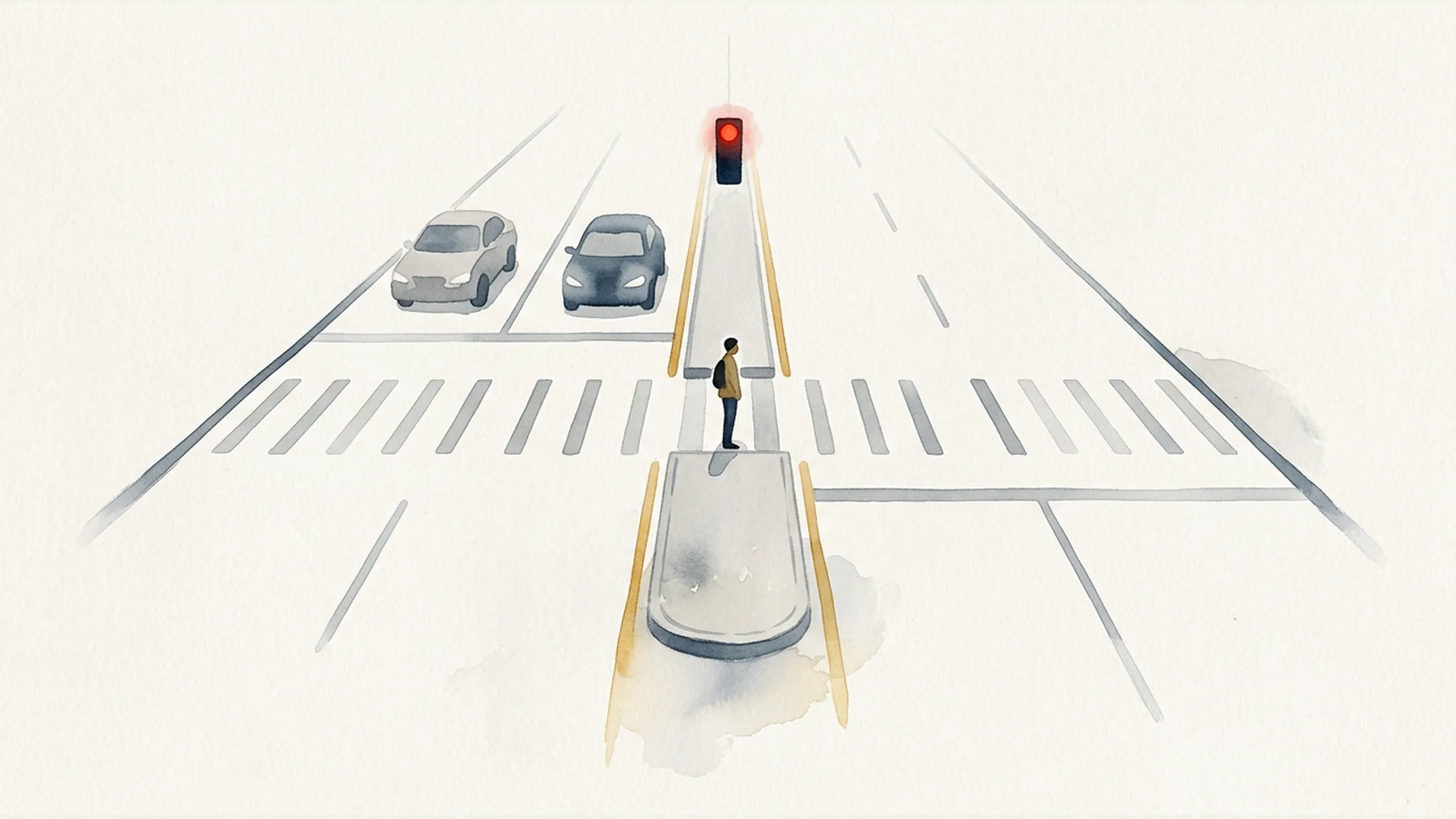
An event-area injury can happen in many ways. A driver may strike a pedestrian in a temporary crossing. A motorist may enter a bicycle lane or a street that event staff believed was closed. A person may fall after encountering a temporary device. A cyclist may collide with a barricade after a route change. Crowd routing may put people and vehicles into an unexpected conflict. A dangerous condition may also arise while an event is being set up or taken down rather than while it is open.
Those situations do not share one automatic liability rule. Responsibility depends on the precise location, the injury mechanism, the assignments made before the event, the conditions in the field, and the connection between an actor’s conduct and the injury.
A special-event permit can help identify the permittee and expected controls. An approved traffic-control plan can show how a closure or detour was supposed to work. Neither document, standing alone, proves that someone acted negligently or caused an injury. The investigation must compare the plan with what actually happened.
First Questions After an Event-Area Injury
Before drawing conclusions about fault, pin down the event scene as precisely as possible.
Where and how did the injury happen?
Identify whether the injury occurred in a marked or unmarked crosswalk, bicycle lane, closed travel lane, crowd space, sidewalk, parking lot, park, bridge, transit facility, or on private property. That distinction may identify the road authority, property controller, permit program, and records custodian.
Also distinguish among a motor-vehicle collision, a bicycle-only crash, a pedestrian fall, an injury caused by crowd movement, and an impact with a temporary device. Portland’s public crash datasets can omit or miss private-property crashes, crashes with no motor vehicle, and unreported events. A missing database entry does not establish that an injury did not happen. At most, public crash data can be an investigative lead, not a complete incident file.
What event phase and field conditions were in effect?
Determine whether the event was being set up, actively operated, changed in response to field conditions, reopened to traffic, or taken down. Ask whether:
- the planned closure was still in effect;
- an intersection, driveway, or local-access point remained open;
- signs or devices had been moved, damaged, obscured, or removed;
- lighting or sight lines had changed;
- staff had received complaints or reports of near misses; and
- a route revision or other field change had been communicated and documented.
Temporary scenes can look materially different an hour later. The timing of photographs, video, inspections, complaints, and device logs therefore matters.
Could a public body be involved?
A City street, county bridge, state route, transit facility, public park, or another government-controlled location may involve the City of Portland, Multnomah County, ODOT, TriMet, or a different public body. Operational participation can matter too—for example, if a public body supplied personnel or devices, inspected the setup, or made a field change.
Potential public-body involvement should be evaluated promptly because Oregon public-body claim notice is separate from ordinary evidence requests and the deadline to file a lawsuit.
Who May Be Responsible? Sort the Actors by Control and Conduct
Do not treat every event participant as interchangeable. For each possible actor, identify the task that actor controlled or undertook, what the actor knew, what happened in the field, and how the conduct may have contributed to the injury.
The driver
A driver’s conduct is often central. Relevant facts may include speed, distraction, impairment, visibility, failure to yield, response to changed routing, and whether the driver obeyed closures and traffic-control devices.
Oregon law imposes duties on drivers and pedestrians to exercise due care. A driver must stop and remain stopped for a pedestrian in a crosswalk when the conditions in ORS 811.028 are met. Current ORS 811.050 also requires a motor-vehicle operator to yield to a person lawfully operating a bicycle in a bicycle lane. A 2026 amendment adds powered micromobility devices to that statute; the Act took effect June 5, 2026, but the amendment becomes operative January 1, 2027. The exact statutory duties depend on facts such as the person’s location, movement, signal status, and whether a bicycle lane or marked or unmarked crosswalk was involved.
For a disputed pedestrian collision, crosswalk position, signal timing, and comparative-fault evidence may require separate analysis. Driver fault also does not necessarily rule out fault by an actor who created or failed to address a separate traffic-control conflict.
The organizer, sponsor, or permittee
First identify the actual permittee. Do not assume that the organization whose name is most visible controlled every route, property, vendor, or activity associated with an event.
PBOT issues special-event permits for moving events on City streets or sidewalks, including parades. Its application materials seek routing and insurance information and may address closures, participant and spectator estimates, affected transit or bridges, signs, notifications, monitors, and possible medical or communications plans. Other activities—such as stationary street events, park events, or events on private property—may use different permit programs.
The signed application, issued permit, special conditions, and approved plans may show what the permittee agreed to do. But holding a permit does not automatically mean the permittee breached a duty or caused an injury. The assigned task and actual performance still need to be established.
Traffic-control, barricade, security, and crowd-management contractors or vendors
Contracts and field records may separate the roles that event branding obscures. One company might design a traffic-control plan; another might supply devices; another might install and remove them. Event staff, volunteers, security personnel, or flaggers may be responsible for monitoring a closure or directing people at specific times.
Ask who:
- designed or revised the traffic-control plan;
- supplied each sign, barricade, fence, cone, light, or channelizer;
- installed, moved, inspected, monitored, maintained, or removed each device;
- staffed a crossing, access point, or crowd route; and
- had authority to correct a field problem.
A contractor or vendor is not responsible merely because it worked at an event. Its actual scope and conduct must connect it to the hazard and injury. Contracts, indemnity clauses, insurance provisions, and additional-insured documents may help identify who undertook a task or who may defend or pay a claim, but those arrangements do not by themselves determine tort fault.
The property owner, occupier, or site controller
Ownership is one part of the inquiry, but practical control may also matter. Determine who owned, leased, occupied, maintained, or controlled the precise injury location and its approaches. Ask who had the ability to correct the condition or warn event attendees.
This can be complicated where an event route moves among a public street, park, transit area, bridge, parking lot, or private site. The relevant controller for one block or access point may not be the same entity that controlled another.
The City, road authority, transit agency, or another public body
Public ownership or permit approval does not automatically establish public-body liability. The investigation should ask whether a public body owned or controlled the site, approved or designed a plan, supplied personnel or devices, inspected the setup, made an operational change, or had notice of a field hazard.
Oregon generally allows tort actions against public bodies under the Oregon Tort Claims Act, but the Act includes defenses and immunities, including discretionary-function immunity. The distinction between protected policy or planning choices and operational implementation is fact- and record-specific. City involvement also does not necessarily relieve an organizer or contractor of responsibility for its own work.
Event Permits and Traffic-Control Plans Are Maps, Not Liability Verdicts
Portland permit and traffic-control materials can reveal who was expected to do what. Their best use is usually as a comparison point for the actual scene.
What the permit package may show
Useful records can include:
- the signed application and issued permit;
- special permit conditions;
- route and closure maps;
- the approved traffic-control plan and revisions;
- agency review comments;
- closure and reopening times;
- expected participant and spectator counts;
- affected transit routes or bridges;
- notification, signage, staffing, medical, and communications provisions; and
- City-held insurance documents.
A blank application or general manual describes the program. The event-specific, signed and approved documents are usually more useful for identifying assignments.
What to compare with the actual scene
Portland’s traffic-control rules and manual address subjects such as signs, markings, channelization, device placement and maintenance, lighting, surveillance, inspection, authorization, and protection of the public. Compare the approved controls with timestamped evidence of what was actually installed and maintained.
A missing device, failed inspection, or unexplained field deviation may be important evidence. It still does not automatically prove negligence. The applicable duty or standard of care, the responsible actor, breach, causation, damages, and any comparative fault remain incident-specific questions. Likewise, permit issuance does not guarantee a safe result or establish that the approving agency caused a later injury.
Why the type of barricade or channelizer matters
Temporary devices perform different jobs. PBOT’s manual explains that pedestrian channelizing devices can provide a continuously detectable edge, but they are not intended to function as redirective crash barriers. It also states that barricades used to close a sidewalk should extend across its full width and include a detectable edge meeting pedestrian-channelizer requirements.
Those standards may help evaluate visibility, routing, and detectability. They do not turn a cone, fence, delineator, ordinary barricade, or pedestrian channelizer into equipment designed to stop a vehicle. Accurate analysis requires the approved plan, photographs, product information, and, where appropriate, expert review of the specific device.
How current Oregon standards fit into the analysis
Effective June 1, 2026, Oregon adopted updated MUTCD-related materials, an Oregon supplement, and a 2026 temporary traffic-control handbook. Road jurisdictions may impose additional or more restrictive requirements. The standard that applies can depend on the event date, location, duration, and road authority.
Conformity or nonconformity may inform a standard-of-care analysis, but it does not answer who controlled a device, whether common-law negligence occurred, whether particular conduct caused the injury, or how fault should be allocated. These date-sensitive materials should be rechecked before use in a specific claim.
Preserve Short-Lived Evidence Before the Event Scene Changes
Event scenes are temporary. Devices may be removed or reused, routes reopened, staff dispersed, and digital recordings overwritten. Prompt preservation does not guarantee that evidence will remain available, but delay can make an already complex investigation harder.
Record the scene and identify witnesses
When it can be done safely, preserve timestamped photographs or video showing:
- approaches and sight lines;
- crosswalk, bicycle-lane, sidewalk, and travel-lane positions;
- signs, barricades, fencing, cones, channelizers, lights, and their placement;
- open driveways, intersections, or access points;
- lighting, weather, crowd routes, and obstructions; and
- whether setup, active operations, reopening, or teardown was underway.
Keep original files and their metadata where possible. Obtain contact information for witnesses, including event staff, volunteers, monitors, flaggers, security personnel, officers, drivers, nearby residents or businesses, and transit operators. Do not take, move, or interfere with event equipment.
Seek video, dispatch, and crash records
Possible evidence may include event surveillance, nearby business or residential video, transit vehicle footage, body-worn or dashboard video, cell-phone recordings, 9-1-1 audio, dispatch or CAD records, police materials, and available vehicle or bicycle data.
Do not assume a complete police file exists. Portland Police Bureau policy calls for investigation of specified crash categories, but not every crash receives a full investigation. Official crash databases can also be incomplete, delayed, or inaccurate for a specific event. Raw reports, witnesses, recordings, physical evidence, and event or vendor records may tell a fuller story.
Preserve the plan-versus-field paper trail
Seek the issued permit, approved traffic-control plan and revisions, route maps, review comments, inspection records, enforcement material, complaints, and relevant communications. Other useful records may include:
- device rental, delivery, inspection, movement, and pickup logs;
- monitoring or staffing logs;
- contracts and scopes of work;
- indemnity and relevant insurance documents; and
- pre-event site walks, hazard reviews, complaints, or near-miss reports.
Physical equipment may be repaired, moved, reused, or redeployed. Product identification and condition may matter. Appropriate preservation requests may need to reach private entities as well as public agencies.
Use public-records requests precisely—but do not confuse retrieval with preservation
Portland’s Public Records Request Portal can be used to seek existing, nonexempt City records from the bureau that holds them. PBOT may hold permit and traffic-control materials. PPB, the Bureau of Emergency Communications, Portland Fire & Rescue, Parks, or another bureau may hold its own records.
A focused request should identify the event, date range, location, and record categories. Even then, a response may involve fees, redactions, or delay. A public-records request does not preserve private video or equipment, compel anyone to create a record, or replace Oregon Tort Claims Act notice.
Public-Body Claims Have a Separate Notice Requirement
If any public body may be connected to the location or operation, notice analysis should begin promptly, even while responsibility remains uncertain.
Notice and filing are different requirements
ORS 30.275 generally requires notice within 180 days for claims other than wrongful death and within one year for wrongful-death claims. The statute contains details, including an exclusion of up to 90 days for incapacity in qualifying circumstances. It also generally requires an action to be commenced within two years after the alleged loss or injury.
These periods serve different purposes. Meeting a lawsuit-filing deadline does not excuse missed notice, and giving notice does not itself file a lawsuit. Accrual, incapacity, the correct recipient, the contents and method of notice, and other statutory requirements need incident-specific analysis. The claimant bears the burden of proving compliance.
Common steps are not safe substitutes for compliant notice
Do not assume that any of the following automatically satisfies ORS 30.275:
- a police or crash report;
- City or agency awareness of the incident;
- a complaint to event staff or a bureau;
- a public-records request; or
- an ordinary insurance submission.
Portland provides forms for personal-injury, property-damage, and City-vehicle claims and says such claims must be submitted in writing within 180 days. That form is a claim-intake tool. It does not establish that the City is the correct public body, that a claim meets every statutory requirement, or that the City is liable.
Identify every potentially involved public body
The correct entity may vary with the site and activity. A City street, county facility, state route, transit operation, park, school or port district, or another public site may require separate identification and deadline analysis. A submission to one body should not be assumed to protect a claim involving another.
The Oregon Tort Claims Act also includes date-sensitive liability limits. Those limits are statutory ceilings, not automatic case values, and the applicable table depends on matters including the accrual date, type of public body, type of damage, and number of claimants.
What if More Than One Person or Entity Shares Fault?
Driver conduct and event-control conduct are not mutually exclusive. Evidence might support separate questions about a driver’s failure to yield, a contractor’s device placement, a permittee’s monitoring, a site controller’s warning, or a public body’s operational conduct. It may instead support only one of those theories—or none.
Oregon’s modified comparative-fault rule, ORS 31.600, generally allows a claimant to recover when the claimant’s fault is not greater than the combined fault of the persons specified by the statute. Recoverable damages are reduced in proportion to the claimant’s percentage of fault. An alleged mistake by a pedestrian or cyclist therefore does not automatically bar recovery, but the comparison depends on the evidence and the persons properly included under the statute.
Under ORS 31.610, defendants are generally responsible for the percentage of damages allocated to them, subject to statutory rules, including rules addressing certain uncollectible shares. No allocation should be assumed before the actors and evidence are identified. The practical lesson is to investigate each role rather than stopping with the most visible actor.
A Practical Investigation Checklist
- Pin down the incident. Record the date, time, exact location, event phase, injury mechanism, and crosswalk, bicycle-lane, street, sidewalk, transit, park, or property status.
- Preserve available proof. Keep original photos and video, witness contacts, medical documentation, crash information, and any damaged personal property.
- Identify the actors. Determine who drove, owned or controlled the site, held the permit, organized or staffed the activity, and undertook traffic-control, barricade, security, or crowd-routing work.
- Seek the working records. Request the issued permit, approved traffic-control plan and revisions, contracts and scopes, inspections, monitoring and device logs, dispatch material, complaints, and available video.
- Compare plan and field conditions. Determine what was assigned, what was approved, what was deployed, and what changed. Do not treat a technical deviation alone as the end of the negligence analysis.
- Screen for public bodies early. Identify each potentially involved government entity and evaluate notice requirements separately from lawsuit-filing deadlines.
- Consider incident-specific legal advice. Short notice periods and changing or unavailable evidence can make early review important.
Frequently Asked Questions
Can an event organizer be responsible for a pedestrian crash near a Portland festival?
Possibly, but not simply because its name is associated with the event. The relevant questions are whether the organizer controlled or undertook the task connected to the hazard, whether its conduct was unreasonable, and whether that conduct caused the injury. The permit package, contracts, and field records may help identify its role.
Does a missing barricade or traffic-control plan violation automatically prove negligence?
No. A missing device or unexplained plan deviation may be important evidence, but it does not automatically establish civil liability. The investigation still must identify the responsible actor and establish the applicable duty or standard of care, breach, causation, damages, and any comparative fault.
Is an ordinary event barricade supposed to stop a vehicle?
Not necessarily. Temporary devices have different functions. PBOT materials distinguish pedestrian channelization from redirective crash barriers. The approved plan, photographs, product records, and device-specific evidence are needed before describing equipment as vehicle stopping or crash rated.
Can both a driver and an event contractor share fault?
Potentially. Oregon law can allocate fault among qualifying actors when evidence supports separate conduct that contributed to an injury. A driver’s conduct does not automatically eliminate scrutiny of traffic-control work, and a contractor’s presence does not automatically establish its fault.
How long do I have to notify the City of Portland about an injury claim?
ORS 30.275 generally requires notice within 180 days for claims other than wrongful death and within one year for wrongful-death claims, subject to statutory details. The correct public body, recipient, content, and method matter. Notice is also different from the deadline for filing suit, so individual review may be important.
Will a police report or Portland public-records request protect a public-body claim?
Do not assume so. Neither is a safe substitute for compliant notice under ORS 30.275. A police report may also be limited or absent, and a records request is only one evidence-gathering tool.
Talk With Johnson Law About a Portland Event-Area Injury
If you were injured while walking or cycling near a Portland festival, parade, street closure, or other large event, Johnson Law can review the incident-specific facts, including who controlled the location, what temporary traffic measures were in place, which evidence may need attention, and whether a public-body notice issue exists. Contacting the firm does not guarantee that a claim exists or predict any outcome.
Source Notes
The workflow’s source and legal review was current through July 25, 2026. Date-sensitive statutes and traffic-control materials should be checked again before application to a particular incident.
- Portland Rose Festival Foundation, Portland Rose Festival History — recurring-event context only.
- PBOT, Apply for a Special Event Permit and City Code Chapter 7.22 — permit scope and City street/sidewalk-use requirements.
- PBOT, Special Event Permit Application — application fields and published permit conditions; an event-specific issued permit and approved plans are better evidence.
- City of Portland, TRN-2.08 Traffic Control Plan Rules & Procedures and PBOT Temporary Traffic Control Manual — traffic-control subjects, field responsibilities, and device-function guidance.
- ODOT, Implementing Uniform Traffic Control Devices and ORS Chapter 810 — current Oregon traffic-control standards and road-authority conformity.
- ORS Chapter 811 (2025 Edition), Oregon Laws 2026, chapter 101, sections 9, 33, and 34, and ORS Chapter 814 — selected driver, pedestrian, bicyclist, and bicycle-lane duties. The 2026 Act took effect June 5, 2026, but its amendment to ORS 811.050 becomes operative January 1, 2027; the amendment adds powered micromobility devices and does not remove bicycle-lane protection.
- ORS 31.600–31.610 — comparative fault and several liability.
- ORS 30.265 and 30.275 — public-body tort liability, immunity, notice, and action timing.
- City of Portland Risk Management, File a Claim Against the City — City claim-intake information.
- City of Portland, Public Records Requests — requesting existing City records.
- Portland Police Bureau Directive 0640.50, PBOT, How Crash Data Works, and PBOT, Vision Zero Dashboard Guide — limits of police investigations and public crash datasets.
This article provides general educational information and is not legal advice. Liability, deadlines, notice compliance, and available claims depend on the facts and law applicable to a particular incident. Reading this article or contacting Johnson Law does not create an attorney-client relationship.
Client-First Fee Promise
Client First = Bills First, Fees Second
Your unpaid medical bills do not have to make your lawyer's fee bigger. Johnson Law subtracts qualifying medical bills before calculating our fee, helping clients keep more of their settlement.
Applies to qualifying cases. Results vary.